Table of Contents
- What Makes a Sleep Shop High Quality
- Professional certifications and industry standards sleep shops should meet
- Signs of reputable sleep shop customer service practices
- How to Test Mattress Quality Before Buying at Sleep Shops
- Physical tests you should perform during your sleep shop visit
- Questions to ask about mattress construction and materials
- Red flags that indicate poor mattress quality in sleep shops
- Local Sleep Shops vs Online Mattress Retailers: Complete Comparison
- Advantages of buying from local quality sleep shops
- When online mattress buying makes more sense than sleep shops
- Cost differences between sleep shops and online retailers
- Sleep Shop Return Policies and Trial Periods: What to Expect
- Standard trial period lengths offered by quality sleep shops
- Return policy terms that protect your mattress investment
- How Mattress Firm and other chains compare to local sleep shops
- Essential Questions to Ask Sleep Shop Sales Staff
- Mattress construction and durability questions
- Warranty and service questions for long-term satisfaction
- Pricing and negotiation questions to ask at sleep shops
- Sleep Shop Financing Options and Payment Plans for Quality Mattresses
- Zero-interest financing programs available at quality sleep shops
- Alternative payment options beyond traditional financing
- How to evaluate financing terms at different sleep shops
- Finding Quality Sleep Shops in Your Local Area
- How to research sleep shop reputations and customer reviews
- What to look for when visiting Quality Sleep Shop LaGrange and similar local stores
- Frequently Asked Questions About Quality Sleep Shops
- How much should I expect to spend at quality sleep shops?
- Do quality sleep shops offer same-day delivery?
- Should I buy the mattress protection plan offered at sleep shops?
- How do I know if a sleep shop is trying to oversell me?
- Can I negotiate prices at quality sleep shops?
- What’s the difference between sleep shops and furniture stores selling mattresses?
- How long should I test a mattress before deciding at a sleep shop?
- Do quality sleep shops typically honor manufacturer warranties?
Quality sleep shops are specialized mattress retailers that combine professional expertise, comprehensive testing opportunities, and customer-focused policies to help you find the perfect sleep solution. These establishments distinguish themselves from general furniture stores through certified staff, extensive trial periods, and quality assurance standards that prioritize your long-term sleep health.
• What Makes a Sleep Shop High Quality
– Professional certifications and industry standards
– Signs of reputable customer service practices
• How to Test Mattress Quality Before Buying
– Physical tests to perform during visits
– Construction and material questions
– Red flags indicating poor quality
• Local Sleep Shops vs Online Retailers
– Advantages of local quality sleep shops
– When online buying makes sense
– Cost differences comparison
• Return Policies and Trial Periods
– Standard trial period lengths
– Investment protection terms
– Chain vs local shop comparisons
• Essential Questions for Sales Staff
• Financing Options and Payment Plans
• Finding Quality Sleep Shops Locally
What Makes a Sleep Shop High Quality
A high-quality sleep shop prioritizes evidence-based sleep health through certified staff expertise, comprehensive product testing opportunities, and transparent customer service policies designed to optimize your long-term sleep satisfaction.
The foundation of quality sleep shops lies in their holistic approach to sleep wellness, understanding that proper rest directly impacts your physical health, mental clarity, and overall well-being. For those seeking to optimize their sleep environment beyond just mattress selection, our comprehensive quality sleep shop guide explores additional sleep enhancement strategies and product considerations.
Professional certifications and industry standards sleep shops should meet
Certified Sleep Product Specialists (CSPS) represent the gold standard in sleep shop expertise, requiring 40+ hours of specialized training covering sleep physiology, mattress construction, and customer assessment techniques.
Look for shops displaying International Sleep Products Association (ISPA) membership certificates, Better Sleep Council endorsements, and manufacturer-specific training credentials from brands like Tempur-Pedic, Saatva, or Purple. Quality shops invest in ongoing education programs covering emerging sleep technologies, ergonomic principles, and materials science developments.
Signs of reputable sleep shop customer service practices
Reputable sleep shops offer pressure-free environments where you can test mattresses for 15-20 minutes minimum, provide detailed product comparisons without pushing high-margin items, and offer transparent pricing with written estimates.
Watch for shops that conduct sleep needs assessments covering your preferred sleep position, partner movement sensitivity, temperature preferences, and any existing pain points. Quality establishments maintain clean testing environments with fresh protective covers, offer sanitized pillows for testing comfort, and provide detailed warranty explanations without rushing your decision-making process.
How to Test Mattress Quality Before Buying at Sleep Shops
Effective mattress testing requires systematic evaluation of support, comfort, motion isolation, and temperature regulation through specific physical tests that simulate your actual sleep conditions.
Proper testing helps identify mattresses that will maintain their supportive properties long-term while addressing your specific comfort preferences and sleep health needs.
Physical tests you should perform during your sleep shop visit
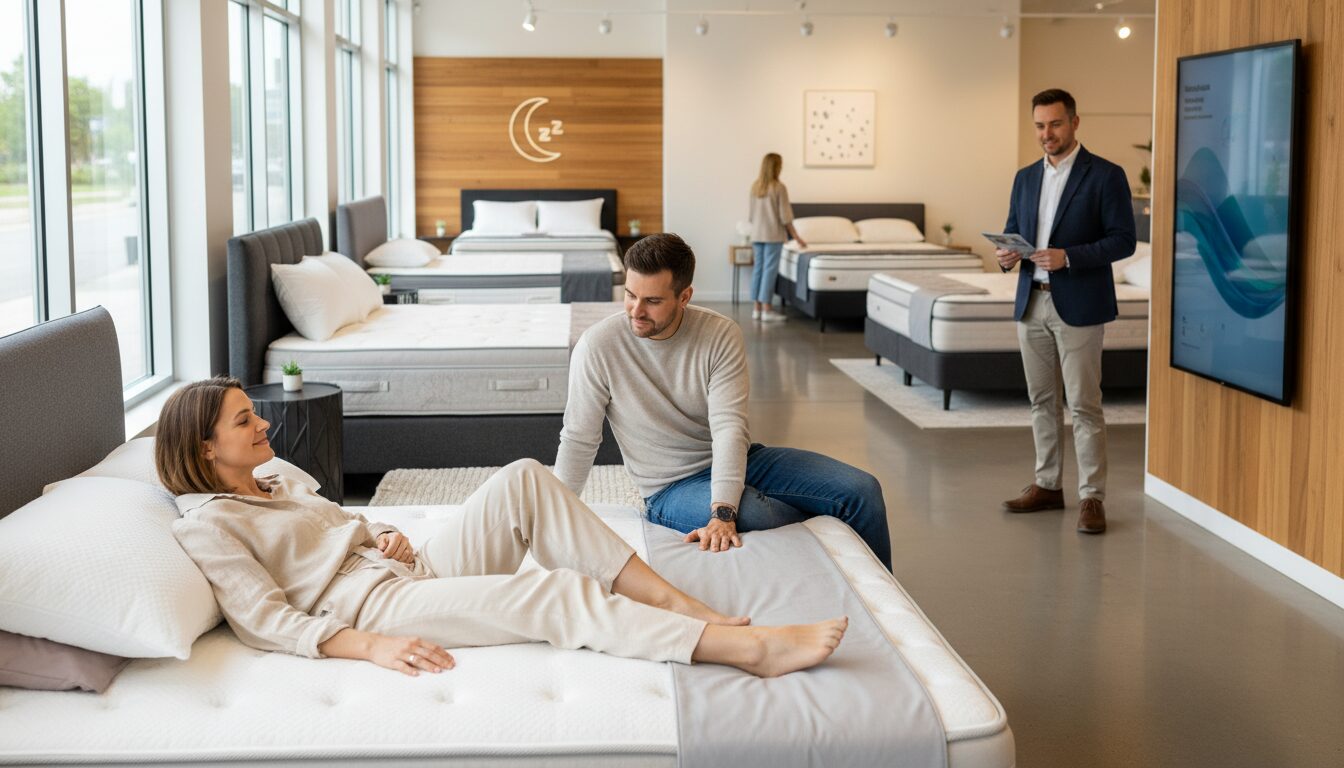
Test each mattress for minimum 10-15 minutes in your primary sleep position, then spend 3-5 minutes in secondary positions to evaluate edge support, motion transfer, and pressure point relief.
Perform the “roll test” by moving from side to back to stomach, noting any resistance or sinking that might disrupt natural sleep movements. Check edge support by sitting on the mattress perimeter and lying near the edge to simulate real-world usage patterns. Test motion isolation by having a partner (or sales associate) move on the opposite side while you remain still.
Questions to ask about mattress construction and materials
Inquire about coil gauge and coil count for innerspring mattresses (lower gauge numbers indicate thicker, more durable coils), foam density measurements for memory foam layers, and certifications like CertiPUR-US for chemical safety standards.
Ask about the mattress’s expected lifespan based on your weight and sleep habits, replacement warranty terms for sagging beyond acceptable limits (typically 1-1.5 inches), and whether the comfort layers are removable or replaceable for extended mattress life.
Red flags that indicate poor mattress quality in sleep shops
Avoid mattresses with strong chemical odors that don’t dissipate quickly, excessive sinking when you sit on the edge, or visible sagging in display models that should indicate premature wear patterns.
Be cautious of shops pushing “limited time” deals without allowing adequate testing time, refusing to provide written warranty terms, or unable to explain mattress construction details. Quality mattresses should feel consistent across the entire surface without noticeable soft spots, lumps, or uneven firmness distribution.
Local Sleep Shops vs Online Mattress Retailers: Complete Comparison
Local sleep shops offer hands-on testing and immediate availability, while online retailers typically provide lower prices and convenient home delivery, creating distinct advantages depending on your shopping preferences and priorities.
Choosing between local and online options requires weighing factors like testing opportunities, price differences, return logistics, and ongoing customer support availability.
Advantages of buying from local quality sleep shops
Local shops provide immediate mattress testing across multiple brands and models, allowing side-by-side comparisons that online shopping cannot replicate, plus same-day or next-day delivery without shipping delays.
Experienced sales staff can identify specific mattresses based on your sleep position, weight, and comfort preferences through personalized consultations. Local shops often provide services like old mattress removal, white glove delivery with setup, and direct access to warranty service without shipping logistics complications.
When online mattress buying makes more sense than sleep shops
Online retailers excel when you have specific brand preferences, understand your firmness requirements from previous experience, or prioritize significant cost savings over hands-on testing opportunities.
Consider online options if you live in areas with limited local sleep shop selection, prefer researching extensively through customer reviews and detailed specifications, or want access to direct-to-consumer brands unavailable in traditional retail locations. Online purchases work well for couples who agree on firmness preferences and have successfully purchased mattresses remotely before.
Cost differences between sleep shops and online retailers
Online mattress retailers typically offer 20-40% lower prices due to reduced overhead costs, direct-to-consumer models, and streamlined inventory management compared to brick-and-mortar sleep shops.
However, factor in potential return shipping costs ($100-200+ for online returns), extended trial periods that may delay satisfaction guarantee resolution, and possible setup fees that local shops often include free. Local shops may match online pricing during promotional periods and offer value-added services like extended warranties or free accessories.
Sleep Shop Return Policies and Trial Periods: What to Expect
Modern sleep shops typically offer 90-365 day trial periods allowing you to test mattresses in your home environment, with most quality retailers providing full refunds or exchanges if the mattress doesn’t meet your comfort expectations.
Understanding trial period terms, return logistics, and associated fees helps protect your investment while ensuring you can find the optimal mattress for your sleep needs.
Standard trial period lengths offered by quality sleep shops
Quality sleep shops commonly provide 90-120 day trial periods for traditional mattress purchases, with some premium retailers extending trials to 365 days for higher-end models or specialty sleep systems.
Most trial periods include a mandatory “break-in” period of 30 days before returns are accepted, allowing your body to adjust to the new sleep surface and the mattress materials to settle into their intended feel and support characteristics.
Return policy terms that protect your mattress investment
Look for return policies that include free pickup service, full purchase price refunds (not just store credit), and clear guidelines about mattress condition requirements for returns without restocking fees.
Quality protection includes policies that don’t penalize normal settling or slight impressions (under 1 inch), accept returns for comfort reasons without requiring defect documentation, and provide transparent timelines for refund processing after pickup completion.
How Mattress Firm and other chains compare to local sleep shops
National chains like Mattress Firm typically offer standardized 120-day trial periods with consistent policies across locations, while local sleep shops may provide more flexible return terms but with varying policy specifics.
Chain stores benefit from established logistics networks for returns and exchanges, standardized staff training, and corporate backing for warranty issues. Local shops often provide more personalized service, flexible negotiation on return terms, and direct owner involvement in resolving customer satisfaction issues.
Essential Questions to Ask Sleep Shop Sales Staff
Prepared questions about mattress construction, warranty coverage, and pricing policies help you evaluate both product quality and retailer reliability while ensuring you receive accurate information for informed decision-making.
Knowing what to ask demonstrates serious buyer intent and often leads to more detailed, honest responses from sales staff who recognize your mattress knowledge level.
Mattress construction and durability questions
Ask about specific foam density measurements (quality memory foam should be 4+ pounds per cubic foot), coil specifications for innerspring models, and expected lifespan based on your body weight and sleep habits.
Inquire about the mattress’s construction layers from top to bottom, including comfort layer thicknesses, transition layer materials, and support core specifications. Request information about how the mattress will change during the initial break-in period and what firmness variations to expect over time.
Warranty and service questions for long-term satisfaction
Request detailed explanations of manufacturer warranty coverage including what constitutes warrantable defects, measurement requirements for sagging claims, and the process for warranty service requests.
Ask whether the sleep shop handles warranty claims directly or requires you to work with manufacturers, what documentation is required for warranty service, and if there are any activities that void warranty coverage. Clarify whether warranty replacements provide identical models or comparable alternatives if your specific mattress is discontinued.
Pricing and negotiation questions to ask at sleep shops
Inquire about current promotions, price matching policies for competitor pricing, and whether additional discounts are available for cash payments or multiple item purchases.
Ask about the true “final price” including delivery, setup, and old mattress removal fees that might be added at checkout. Request information about seasonal sales patterns and whether waiting for specific promotional periods could provide better value.
Sleep Shop Financing Options and Payment Plans for Quality Mattresses
Many quality sleep shops offer financing programs ranging from 0% interest promotional periods to extended payment plans, making premium mattresses accessible while allowing you to prioritize sleep health investments.
Understanding financing terms, qualification requirements, and alternative payment options helps you choose the most cost-effective approach for your mattress purchase.
Zero-interest financing programs available at quality sleep shops
Promotional 0% APR financing typically ranges from 12-48 months for qualified buyers, with most programs requiring minimum credit scores of 600-640 and minimum purchase amounts of $500-$999.
Zero-interest programs often include deferred interest clauses where the full promotional interest becomes due if the balance isn’t paid by the promotional period end, making complete payoff timing crucial for maintaining the 0% benefit.
Alternative payment options beyond traditional financing
Many sleep shops now accept “buy now, pay later” services like Klarna, Affirm, or PayPal Credit, offering 3-6 month payment plans with minimal approval requirements and transparent fee structures.
Some retailers offer layaway programs allowing you to reserve mattresses with partial payments, rent-to-own options for customers with credit challenges, and employer partnership programs that provide employee discounts or payroll deduction payment plans.
How to evaluate financing terms at different sleep shops
Compare total cost including interest charges, origination fees, and early payment penalties across different financing options to determine the true cost of financed purchases versus cash payments.
Evaluate monthly payment amounts against your budget, understand what happens if you miss payments (late fees, interest rate increases), and confirm whether financing offers include the same trial period and warranty terms as cash purchases.
Finding Quality Sleep Shops in Your Local Area
Locating reputable sleep shops requires researching customer reviews, verifying business credentials, and evaluating shop policies before visiting to ensure you invest time with established, trustworthy retailers.
Effective research helps you identify shops that match your budget range, carry preferred brands, and maintain service standards that support long-term customer satisfaction.
How to research sleep shop reputations and customer reviews
Check Better Business Bureau ratings, Google My Business reviews, and Yelp feedback focusing on recent reviews that mention specific experiences with returns, warranty service, and delivery reliability rather than just initial purchase satisfaction.
Look for patterns in customer feedback regarding sales pressure tactics, pricing transparency, and post-purchase support quality. Contact your state’s consumer protection agency to verify any complaints or regulatory issues with specific retailers you’re considering.
What to look for when visiting Quality Sleep Shop LaGrange and similar local stores
Evaluate store cleanliness, product selection variety, and staff knowledge through initial interactions, noting whether sales associates ask about your sleep needs before making recommendations.
Assess whether the store maintains current model displays, provides clean testing environments with protective covers, and offers written information about warranties, trial periods, and return policies. Quality local stores should demonstrate community involvement and maintain established local business relationships.
Frequently Asked Questions About Quality Sleep Shops
How much should I expect to spend at quality sleep shops?
Quality mattresses from reputable sleep shops typically range from $800-2,500 for queen-size models, with premium materials and advanced features pushing prices to $3,000-5,000+ for luxury options.
Budget around $1,200-1,800 for a quality queen mattress that will provide 8-10 years of comfortable, supportive sleep. Factor in delivery fees ($50-150), mattress protection plans ($100-300), and accessories like pillows or sheets when calculating total investment. Quality sleep investments extend beyond mattresses to include sleep-supporting supplements that can enhance your overall rest quality.
Do quality sleep shops offer same-day delivery?
Many local quality sleep shops provide same-day or next-day delivery for in-stock mattresses, especially for customers purchasing during weekdays with delivery requests before 2 PM.
Same-day delivery often includes additional fees ($75-150) and may be limited to specific geographic areas within the shop’s delivery zone. Some shops maintain larger inventories of popular models specifically to accommodate urgent delivery requests for customers replacing failed mattresses.
Should I buy the mattress protection plan offered at sleep shops?
Mattress protection plans provide value if you have children, pets, or concerns about spills and stains that could void manufacturer warranties, but carefully review coverage terms versus cost before purchasing.
Most protection plans cost $150-400 and cover accidental damage like spills, stains, and tears that standard warranties exclude. However, plans often have claim limits, deductibles, and exclusions that may limit their practical value. Consider whether quality mattress protectors ($50-100) might provide adequate protection for your situation.
How do I know if a sleep shop is trying to oversell me?
Warning signs include sales staff who immediately direct you toward the most expensive models, create artificial urgency with “limited time” offers, or discourage thorough testing of different mattresses across various price ranges.
Reputable sales approaches involve needs assessment questions about your sleep habits, health concerns, and budget range before making recommendations. Be cautious of shops that bundle expensive accessories as “required” purchases or claim that less expensive models won’t provide adequate support for your needs.
Can I negotiate prices at quality sleep shops?
Most independent sleep shops offer some price flexibility, especially for cash purchases, multiple items, or during slow sales periods, with potential savings of 10-20% off marked prices.
Approach negotiation respectfully by asking “Is this your best price?” or inquiring about current promotions you might qualify for. Many shops prefer to add value through free delivery, accessories, or extended warranties rather than direct price reductions. Chain stores typically have less pricing flexibility but may offer price matching for documented competitor pricing.
What’s the difference between sleep shops and furniture stores selling mattresses?
Specialized sleep shops focus exclusively on sleep products with trained staff, comprehensive testing environments, and policies designed specifically for mattress purchases, while furniture stores treat mattresses as secondary products.
Sleep shops typically offer better trial periods, more extensive mattress selection, and staff trained in sleep health rather than general furniture sales. Furniture stores may provide competitive pricing but often lack the specialized knowledge and return policies that support optimal mattress selection.
How long should I test a mattress before deciding at a sleep shop?
Spend minimum 10-15 minutes testing each serious mattress candidate in your primary sleep position, followed by 5 minutes testing secondary positions and partner movement scenarios.
Quality sleep shops encourage thorough testing and shouldn’t rush your decision. Remove shoes and spend enough time to move beyond the initial “feel” to evaluate pressure point support, spine alignment, and comfort consistency. Test multiple mattresses for comparison rather than deciding based on the first comfortable option.
Do quality sleep shops typically honor manufacturer warranties?
Reputable sleep shops facilitate manufacturer warranty claims and often provide additional support beyond basic manufacturer requirements, serving as intermediaries to streamline warranty service processes.
Shops should provide clear documentation about warranty coverage, assist with warranty claim paperwork, and offer guidance about warranty requirements like proper foundation support. Some quality retailers provide their own additional warranties or satisfaction guarantees that exceed manufacturer coverage. While focusing on mattress quality, it’s worth noting that achieving optimal sleep also benefits from addressing factors like stress and mental clarity through techniques such as mindfulness meditation for reducing racing thoughts, which can significantly impact sleep quality alongside your mattress choice.